Anna’s Hummingbird
Anna’s hummingbird is among the most common hummingbirds along the Pacific Coast of Oregon. It is the only hummingbird to spend the winter in northern climates.
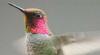
Anna’s hummingbird is among the most common hummingbirds along the Pacific Coast of Oregon. It is the only hummingbird to spend the winter in northern climates.
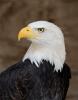
Range The bald eagle can be spotted throughout Oregon’s large inland lakes, marshes and other areas that provide tall trees or cliffs suitable for nesting. Frequent sightings of breeding pairs occur in Upper Klamath Lake, along the Columbia River and at the Crane Prairie and Wickiup reservoirs.
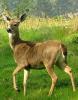
RangeWillamette Valley, Klamath Mountains, West Cascades and Coast Range.DescriptionA mature black-tailed deer is about 66 inches in length and weighs between 100 to 200 pounds (females are smaller than males). They are distinguished by their triangular tail with a dark brown or black top and a white underside.
RangeBobcats are found throughout Oregon in riparian, mixed conifer, lodgepole pine, ponderosa pine, aspen, white oak and mixed conifer-hardwood forest types.
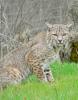
Image 'Range
RangeThe deer mouse has one of the broadest distribution of any species, and occurs throughout Oregon. DescriptionThis species has white feet, usually white undersides, and brownish upper surfaces. Their tails are relatively long, sometimes as long as the head and body, producing an overall length of up to 7 inches.
RangeThe Coast Range, Willamette Valley, Klamath Mountains, West Cascades, East Cascades, Basin and Range, and Blue Mountains.DescriptionAdults are about 14 inches in length including the tail, and weigh between 150 and 300 grams. Their appearance varies according to the season. In the summer, they are grayish with pale orange on the chest and belly. In the winter, the coat is browner and the underside is grayer.
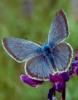
RangeFender's blue butterfly can be found in Oregon’s native grasslands and upland prairies. The Willamette Valley, Baskett Slough National Wildlife Refuge and Willow Creek Main Preserve are home to the largest remaining populations.
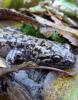
RangeGarter snakes are some of the most common reptiles in much of their ranges, including the Coast Range, Klamath Mountains, Willamette Valley, West Cascades, East Cascades, Columbia Plateau and Blue Mountains.

RangeThe giant Pacific salamander can be found along Oregon’s west coast.
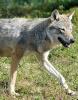
RangeBlue Mountains. There are three documented packs located in the northeastern portion of the state. DescriptionAlthough they’re called gray wolves, they can range in color from arctic white to tan and gray to jet-black. Males range in weight from about 45 to 175 pounds. Females weigh slightly less than males.
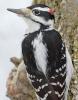
RangeThe hairy woodpecker is widespread throughout Oregon. It is found primarily in mixed-conifer and ponderosa pine forests, as well as adjacent deciduous stands, especially during the breeding season.
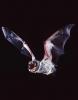
RangeThis bat roosts among the branches of both deciduous and coniferous trees throughout the state and likes to feed around permanent outdoor lights. It migrates north to Oregon in the spring and returns south for the winter.
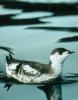
RangeThese seabirds nest on mossy platforms on the limbs of old tree stands, no more than 55 miles inland along Oregon’s Coast Range and Klamath Mountains.DescriptionIt is typically white underneath with a black crown, nape, wings and back. Adults average 9.5 to 10 inches in length, with an average wingspan of 16 inches and weigh between 9 to 12.5 ounces.
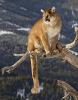
RangeThe mountain lion can be found throughout Oregon, but primarily western Oregon. East of the Cascade Range the species is probably limited largely to the Ochoco, Blue and Wallowa mountains.DescriptionApproximately 2 feet high at the shoulder and 3.5 to 5.5 feet long, the mountain lion is Oregon’s largest feline, typically weighing about 110 to 180 pounds.
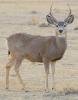
RangeMule deer are widespread east of the Cascades (East Cascades, Columbia Plateau, Blue Mountains, Basin and Range).
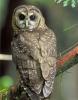
RangeIn Oregon the northern spotted owl inhabits the older coniferous forests of the Coast Range, Klamath Mountains, Willamette Valley, West Cascades and East Cascades.
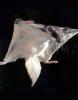
RangeThe Northern Flying Squirrel is found in the Coast Range, Klamath Mountains, Willamette Valley, West Cascades, East Cascades and Blue Mountains.DescriptionLight brown or cinnamon fur on their upper body and whitish underneath, this is the smallest tree squirrel in Oregon. A furred flap extends from the ankle to the wrist, which allows it to glide from tree to tree.
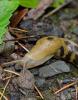
RangeThe Pacific banana slug can be found in foggy moist forest habitats of western Oregon.DescriptionThe Pacific banana slug is the second-largest species of terrestrials in the world, growing up to 10 inches long and weighing up to 4 ounces. They are often bright yellow, although they may also be green, brown or white. Some slugs have black spots.
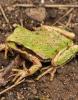
RangeThey range throughout Oregon and can live in a variety of habitats, from sea level up to 10,000 feet in elevation.DescriptionThe Pacific tree frog is approximately 1.5 inches in length, with a dark mask extending from the nostrils to the shoulders. The skin may appear green, brown, reddish, bronze or pale gray. It may often be heard croaking, especially after it rains.