
Fall bird migration in Oregon’s forests
September 15, 2026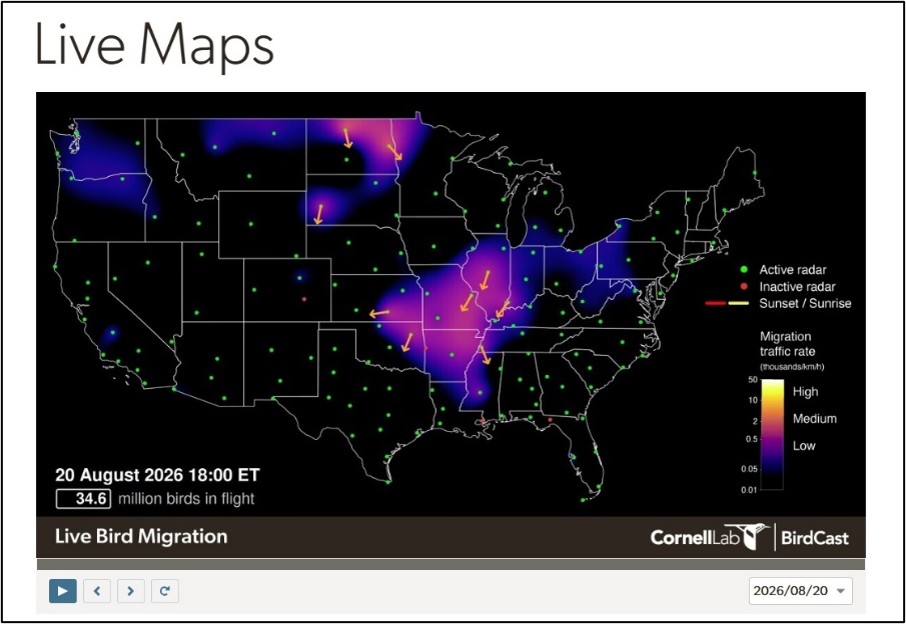
The winding down of summer in the northern hemisphere means wildlife will soon be on the move in a big way. Having completed their seasonal mission to breed and raise young in the Pacific Northwest or sunny far-north during spring and summer, many bird species will be making the journey south to winter habitats, sometimes traveling thousands of miles. This phenomenon will involve billions of individual birds over several months, with millions of them traveling through the skies simultaneously each night. Occasionally, nightly bird movements can even top 1 billion individuals!
How and why do birds migrate?
Migration is a perilous endeavor that can push birds to their limits and beyond. Predators, storms, exhaustion and a myriad of anthropogenic dangers claim the lives of billions of migrating birds each year. So why do it? In short, it is because birds evolved to seek better conditions in different places at different times of year, and the risk is worth the reward. By moving south and closer to the equator in winter, birds can avoid the seasonal slowdown of the north and take advantage of abundant daylight, as well as plant and insect life. Returning north in spring for breeding means the timing is just right for emerging insects and budding plants, with plenty of space for nesting and fewer predators than in the tropics. Similarly, birds that travel to the far-north in spring are fueled by incredible amounts of daylight, can make use of vast expanses for nesting, and feed on a brief, but intense, seasonal burst of plants and insects.
For a deeper dive into the details of bird migration, see the Cornell Lab of Ornithology’s All About Birds website.
The Pacific Flyway
Oregon lies within the Pacific Flyway, one of North America’s four major bird migration routes. This route is used as a highway connecting the far-north Arctic region of eastern Russia and Alaska to sites as far south as Patagonia in South America, and everything in between.
When does migration happen?
Migration can generally be observed during two seasons in Oregon: spring and fall. Spring migration produces summer migrants, which are those species that begin arriving in Oregon as early as February to breed, nest and raise their young, only to leave again in late summer and early fall. Arrival dates vary by species.
Winter migrants are birds that breed elsewhere but return to Oregon in the fall to spend their winters here. Winter migrants include many species of waterfowl and shorebirds, as well as raptors and sparrows. Many of Oregon’s familiar winter waterfowl species spend summers breeding on sunny arctic tundra, then migrate south to wait out winter in milder climates.
Species Spotlight: Western purple martin (Progne subis arboricola)
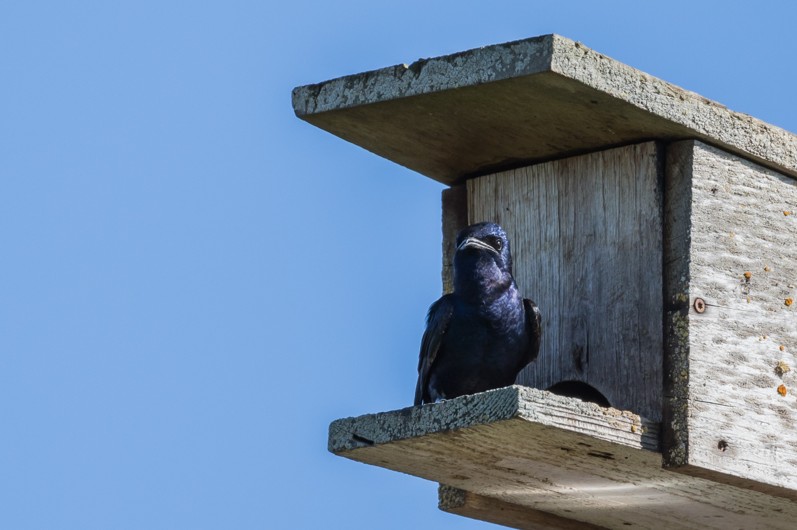
The western purple martin is a summer migrant to Oregon, foraging and breeding mainly west of the Cascades from about March till October. To get here, these large swallows travel up to 8,000 miles from parts of South America, mainly Brazil. Purple martins are linked to Oregon’s forests by the fact that they nest in snags — often near water, but also in upland forest habitats. Land managers and small forest landowners can make an impact for purple martin and other cavity-nesters by maintaining the presence of snags in woodlands or by setting up nest boxes, like this one:
| Examples of summer migrant birds associated with Oregon’s forests: |
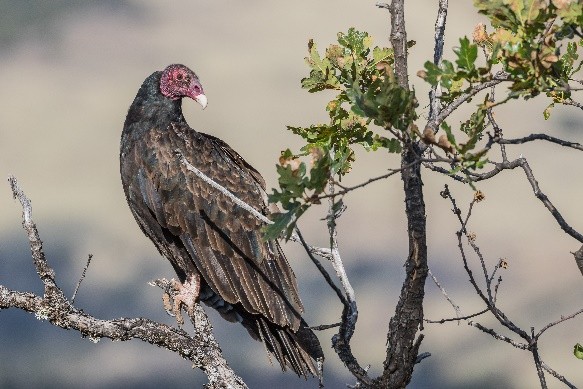
| Turkey vulture |
| Osprey |
| Western tanager |
| Purple martin |
| Violet-green swallow |
| Western wood pewee |
| Black-headed grosbeak |
| Swainson’s thrush |
| Hermit warbler |
| Olive-sided flycatcher |
| Common nighthawk |
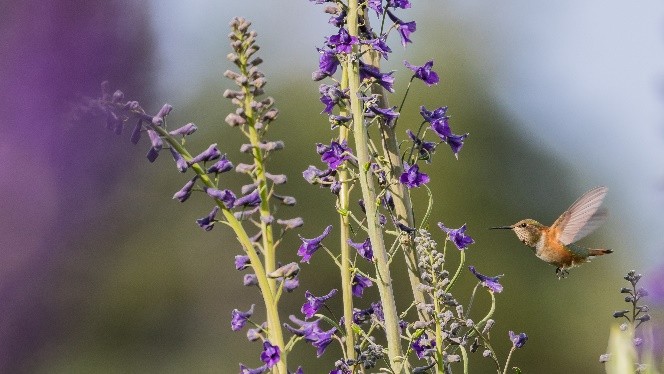
| Rufous hummingbird |
What can we do to help migratory birds?
Here are several ways you can help migratory birds this fall and in the future:
Reduce light pollution
Bright lights are known to disorient birds as they complete their nocturnal migration flights. By turning off nonessential outdoor lights overnight during peak migration times, we can reduce our impacts on migratory birds (and save a few dollars on our electric bills, too). For more information, see the Bird Alliance of Oregon’s Lights Out webpage.
Reduce collisions
Glass is essentially invisible to birds, making buildings with large windows a major threat during migration, especially when coupled with disorientation from light pollution. A 2024 study estimated that about 60% of all building collisions resulted in fatality, even accounting for wildlife rehabbers attempting to treat many birds that survive the initial collision. In total, the study suggests that over 1 billion birds die from building collisions annually in the United States alone. Fortunately, there are many approachable methods for helping birds avoid these deadly collisions, including many options for window treatment. For additional info, see All About Birds’ webpage on how to prevent window collisions.
Be stewards of migratory bird habitat
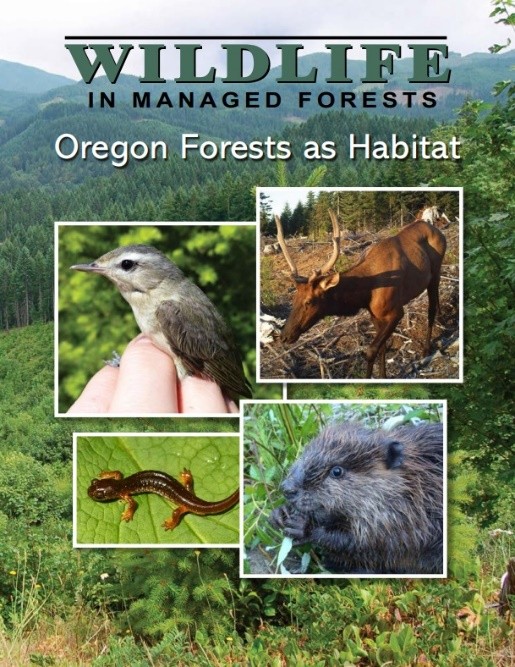
Migratory birds may only spend part of their time in Oregon, but whether they arrive in spring or fall, or are just making a brief stop, having good habitat waiting for them is crucial to their survival. To learn more about creating and maintaining forest habitat for birds and other wildlife, see the Oregon Forest Resources Institute’s Oregon Forests as Habitat and/or Early Seral-Associated Songbirds publications, which are free to download or order in print, and browse their publication library for more ideas.
Keeping up with migration
These days, we have many incredible tools at our fingertips, including resources for learning about bird migrations and even tracking them in real time. Explore some of these resources if you’re still curious about bird migration. You won’t regret it!
Jon Cox
Wildlife Biologist
Cafferata Consulting, LLC